


What is folliculitis in dogs?
Folliculitis is an inflammation or infection of the hair follicles. Imagine each tiny follicle like a hair’s little planting spot. When it gets irritated or infected, the skin around it can redden, swell, and sometimes form pimples or crusts. It can be itchy and uncomfortable, and your dog might scratch, lick, or chew at the area.
This condition can show up as a single patch or several areas across the body. Some dogs get mild cases that clear quickly. Others need more attention. The good news is a thoughtful approach to care can often ease the problem and prevent it from returning.
Common causes of folliculitis
Folliculitis can have several triggers, and often more than one is involved. Here are the usual suspects:
- Bacterial infections: Staphylococcus species are commonly involved. Bacteria can take advantage of weakened skin defenses and cause inflammation around follicles.
- Fungal infections: Yeast such as Malassezia may lead to follicle irritation, especially in floppy-eared or skin-fold-prone breeds.
- Parasitic causes: Mites, fleas, or other parasites can damage skin and set the stage for folliculitis.
- Allergies: Environmental allergens, flea allergy, or food sensitivities can cause itchy skin that becomes secondarily infected.
- Moisture and irritation: Long exposure to water, heavy sweating in skin folds, or frequent wetting can soften skin and increase infection risk.
- Trauma or friction: Constant rubbing from collars, harnesses, or rough play may injure follicles.
- Underlying skin conditions: Endocrine disorders or immune dysfunction can make dogs more susceptible.
Because the triggers vary, your vet may look for more than one factor when figuring out what’s going on.
Which dogs are at higher risk?
Certain breeds and lifestyles seem to see folliculitis more often:
- Dogs with skin folds like bulldogs, pugs, and shar-peis.
- Breeds with thick coats that trap moisture, such as spaniels and setters.
- Dogs with recurring allergies or chronic ear infections.
- Pets that swim frequently or live in humid climates.
- Older dogs with hormonal imbalances.
Even the most pampered dog can get folliculitis, so keep an eye on skin health year-round.
Signs and symptoms to watch for
Folliculitis can look different depending on cause and severity. Common signs include:
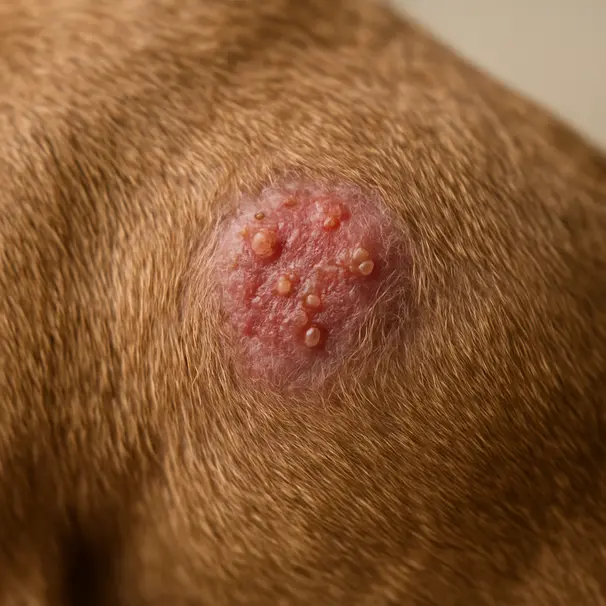
- Small red bumps or pustules around hairs.
- Scabs or crusts forming after bumps break.
- Hair loss in patches.
- Itching that leads to scratching, licking, or chewing.
- Odor from secondary infections.
- Tender or sore skin areas.
Sometimes the signs are subtle, like increased scratching behind an ear, a greasy coat, or a slightly scabby patch. Other times the problem is dramatic and uncomfortable. If you notice changes, jot down where and when they started so you can share details with your vet.
How is folliculitis diagnosed?
A vet visit usually includes a skin exam and a few simple tests. Your vet may suggest:
- Skin cytology: Looking at material from the skin under a microscope can reveal bacteria, yeast, or inflammatory cells.
- Skin culture: Growing bacteria from a sample helps select the right antibiotic when infections are stubborn.
- Wood’s lamp exam: This can highlight certain fungal infections.
- Skin scraping: Used to check for mange mites.
- Allergy testing: If allergies are suspected as an underlying trigger.
- Blood tests: To look for hormonal or immune issues when infections recur.
Diagnosis often combines physical signs, microscopic findings, and history. That helps the vet pick the safest and most effective treatment plan.
At-home care you can try (safe, supportive steps)
If your dog has a mild case, some gentle home care may help alongside veterinary guidance. Consider these steps:
- Keep the area clean: Use a veterinarian-recommended antiseptic shampoo or cleanser. Diluted chlorhexidine or benzoyl peroxide products can help reduce surface bacteria and yeast.
- Dry the skin gently: Pat dry after baths and avoid trapping moisture in folds. Moisture control can reduce recurrence.
- Short-term topical therapy: Your vet may recommend medicated wipes, sprays, or ointments that can help control infection and soothe the skin.
- Prevent licking: An Elizabethan collar or alternatives can stop self-trauma while the skin heals.
- Manage parasites: Ensure flea control is up to date and follow any additional parasite treatments advised by your vet.
Always check with your vet before using over-the-counter products. Some human products may irritate dog skin.
Veterinary treatments your vet might consider
If folliculitis seems more than mild, your vet may suggest:
- Topical medicated shampoos and rinses to reduce microbes and inflammation.
- Topical antibiotics or antiseptics for localized lesions.
- Oral antibiotics for more extensive or deep infections. These are typically prescribed for a set course and rechecked.
- Antifungal medication if yeast or dermatophytes (ringworm) are involved.
- Anti-inflammatory medications or treatments to control itch and irritation.
- Parasite treatments if mites or secondary parasites are present.
- Addressing underlying conditions such as allergies or hormonal disorders through long-term management.
Treatment plans vary with cause and severity. Your vet may ask for follow-up checks to ensure the infection is clearing and to adjust therapy as needed.
Preventing recurrence: practical strategies
Stopping one episode is great. Preventing many more is even better. Here are practical steps to reduce future flare-ups:
- Keep skin dry and clean: After swims or rainy walks, dry your dog’s coat thoroughly, especially skin folds.
- Regular grooming: Brushing removes loose hair and helps air reach the skin. For longer-haired dogs, consider periodic trims in problem areas.
- Balanced diet and weight control: A healthy coat starts with good nutrition and a comfortable body condition.
- Flea and parasite control: Maintain vet-approved prevention year-round.
- Manage allergies: If allergies are diagnosed, work with your vet on an allergy plan. It may include diet changes, medication, or environmental control.
- Choose collar and harness wisely: Soft, well-fitting gear reduces friction. Clean and dry collars periodically.
Small routine habits can have a big impact on skin health.

When to call the vet urgently
Reach out sooner rather than later if you notice:
- Rapidly spreading redness, swelling, or pustules.
- Fever, lethargy, or obvious pain.
- Loss of appetite or signs of systemic illness.
- Severe or persistent itching despite home care.
- Deep, open wounds or areas that are hot to the touch.
A timely veterinary visit can prevent a localized skin problem from becoming a more serious infection.
Tips for pet carers and sitters
As someone caring for another person’s dog, your observations can be invaluable. Keep these tips in mind:
- Communicate changes: Let the owner know about new bumps, scratching, or smell.
- Avoid applying human products: Always check before using anything on the dog’s skin.
- Maintain routines: Stick to the dog’s normal bathing and grooming schedule unless told otherwise.
- Note patterns: If irritation appears after walks in a certain area or after specific foods, mention it.
- Avoid sharing grooming tools between dogs without cleaning them first.
A gentle, organized approach keeps both the dog and their owner reassured.
Common questions from worried pet parents
Can I use human acne creams on my dog?
It’s best to avoid human acne products unless your vet recommends them. Many human formulas contain ingredients that may be too harsh or toxic for dogs.
How long does folliculitis take to clear?
Mild cases may improve within a week or two with proper care. More severe or deep infections can take several weeks and sometimes longer, depending on underlying causes. Follow-up with your vet helps track progress.
Will shaving the area help?
Careful trimming around lesions can improve air flow and allow topical treatments to reach the skin. Shaving should be done gently and preferably by a professional groomer or under vet advice, since improper shaving can irritate skin further.
Final thoughts: patience and small wins
Skin problems can feel frustrating. They may come and go, and some dogs are simply more prone to skin trouble. Your attentiveness, a calm approach, and early veterinary guidance can make a big difference. Celebrate small wins like less itching, reduced redness, or a shiny return to normal fur.
If you’re managing skin issues as a pet owner or carer, remember that help is available. Consider talking with a trusted vet, and keep notes on what helps and what doesn’t. That record becomes gold if troubles return.
Thanks for looking out for your furry friend. A little care goes a long way toward happier, healthier skin.