


Why cats chew cables and what it means
If you’ve ever turned your back for a minute and come back to a chewed charger or a suspect-looking TV cable, you’re not alone. Cats nibble on cords for lots of reasons. Sometimes it’s curiosity, sometimes it’s play, and sometimes it’s a sign they’re trying to soothe sore gums. The important thing is understanding the why, so you can keep your cat safe and your home intact.
In this post we’ll look at common motivations behind cord chewing, the real risks involved, and a toolbox of practical fixes you can try today. These tips are written for pet owners and carers, and they’ll work whether you’re dealing with a new kitten, a bored indoor cat, or a household full of feline explorers.
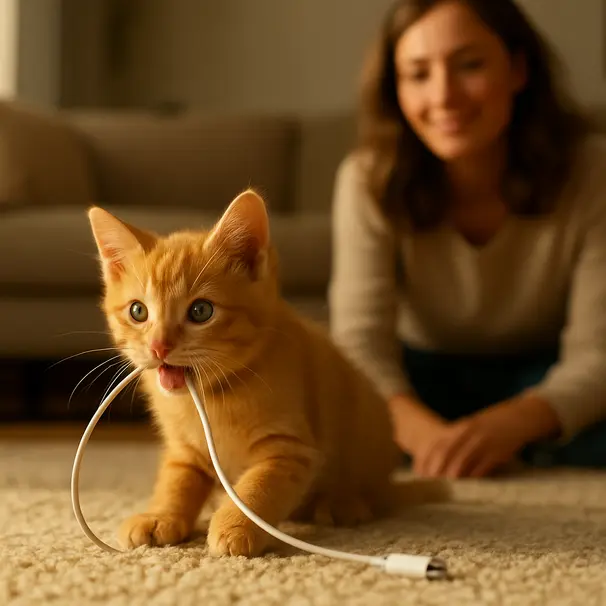
Common reasons cats chew cables
Cats are individuals, but their behaviour often comes from a few familiar causes. Spotting which one fits your cat makes the solution a lot easier.
1. Play and hunting instincts
Cords wiggle, dangle, and sometimes smell like dust or food. That movement mimics prey and invites pouncing. Kittens and younger cats in particular explore the world with their mouths, and a trailing cable can be irresistible. If chewing happens during active playtimes, this may be the main cause.
2. Teething or dental discomfort
Young kittens go through teething phases and may chew to relieve sore gums. Older cats can also gnaw if they have dental pain, inflamed gums, or missing teeth. If chewing comes with pawing at the face, drooling, or a change in eating, consider a veterinary check.
3. Boredom and lack of enrichment
A cat with too little mental or physical stimulation may invent ways to entertain itself. Chewing can become a habit if nothing else captures their attention. Indoor cats especially need outlets for energy and curiosity.
4. Stress, anxiety, and attention-seeking
Some cats chew as a displacement behaviour when they’re anxious or stressed. Changes like a new pet, new people, noisy renovations, or a change in routine can trigger this. Other cats learn that chewing gets a big reaction from humans, which can inadvertently reward the behaviour.
5. Texture and sensation
Certain cords have textures that feel satisfying to the mouth. Some cats like softer, rubbery plugs while others prefer braided fabric cords. If a particular cable always gets targeted, texture may be the draw.
6. Medical causes and pica
A small number of cats have pica, a condition where they eat or chew non-food items. Nutritional deficiencies, gastrointestinal issues, and certain medical conditions may lead to unusual chewing. If your cat chews many different non-food objects, consult your vet to rule out health issues.
The real risks of cable chewing
Chewing cables isn’t just a nuisance. There are several safety and health concerns to keep in mind.
- Electric shock: Damaged cords can expose live wires and shock your cat, which can lead to burns or worse. Never assume a quick lick is harmless.
- Burns: Cats can burn their mouth, tongue, or paws if they bite a plugged-in cord.
- Choking and ingestion: Bits of plastic or insulation can break off and be swallowed, causing choking or intestinal blockage.
- Fire hazard: Frayed wires increase the risk of electrical shorting and household fires.
These risks are why prompt action matters. Even if your cat seems fine after a chew, inspect cords for damage and consider unplugging or replacing compromised cables.
Quick, immediate steps to secure your home
If you find your cat actively chewing a cable, stop the behaviour calmly and safely. Yelling can increase stress or make the behaviour more exciting. Try these immediate actions:
- Remove the cat from the area gently. Pick them up and redirect their attention to a toy.
- Unplug the cord and turn off the device if it’s safe to do so.
- Inspect the cable carefully for nicks or exposed wires. Replace if damaged.
- Offer a safe chew or a treat immediately to create a more positive association away from the cable.
Now, move on to longer-term fixes so this doesn’t become a repeating problem.
Practical, pet-friendly ways to stop cable chewing
Here are tactics that work well together. You don’t need to do every single one, but combining a few will give the best results.
Hide and protect cables
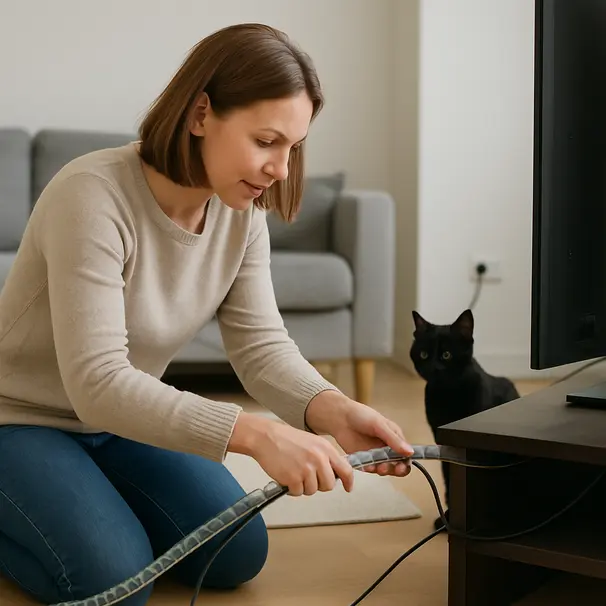
- Use cable covers and cord concealers. Clear plastic tubing, spiral wrap, and fabric cord sleeves are inexpensive and effective. These physical barriers make cords less appealing and harder to bite.
- Elevate cords off the floor when possible. Tape them behind furniture, run them up a wall, or use adhesive hooks to raise them out of reach.
- Tuck cables into cable boxes or behind furniture so they’re out of sight.
- Replace thin, frayed cords with heavy-duty, chew-resistant cords when available.
Make cords unpleasant to mouth
- Bitter sprays: Pet-safe bitter sprays may deter chewing. Test a tiny area for damage first and follow product instructions. Some cats react strongly to the taste, others ignore it, so combine this with other measures.
- Double-sided tape: Cats dislike sticky textures. Placing tape on unobtrusive surfaces near cords can stop the habit. Be mindful of surfaces that might be damaged.
Offer tempting, safe alternatives
- Provide a variety of toys with different textures, especially ones that can be mouthed safely. Puzzle feeders, crinkly toys, and wand toys satisfy hunting drives.
- For teething kittens, look for kitten-specific chew toys that are soft and safe. Rotate toys to keep things novel.
- Offer safe, edible dental treats that encourage chewing on appropriate items rather than cords.
Enrichment and play routines
- Schedule multiple short play sessions daily. Cats often chew out of pent-up energy. A 5- to 10-minute vigorous play session can make a big difference.
- Use interactive play that mimics hunting, like feather wands or laser pointers, followed by a tangible toy to ‘catch’. This sequence can shift the reward from cords to toys.
- Add vertical space such as cat trees or window perches. High vantage points reduce boredom and improve confidence.
Training and positive reinforcement
- Redirect rather than punish. When you see your cat near cords, command a known cue like “come” or “leave it” and reward compliance with a treat or play.
- Reward calm behaviour in areas with hidden cords so your cat learns that staying away is worth something.
- If chewing is linked to attention seeking, avoid dramatic reactions. Give attention for good behaviour rather than reacting to the chewing.
Kitten-specific tips
- Kittens explore with their mouths. Be patient and proactive. Make dangerous cords inaccessible and provide plenty of chew-safe options.
- Supervise playtime and gradually increase independence as they learn boundaries.
Solutions for carers and multi-household situations
If you’re a pet carer or sharing care duties, consistency matters. Here are practical steps to coordinate care:
- Leave clear instructions for house-sitters or carers about which cords are plugged in and which must remain hidden.
- Keep a kit with bitter spray, extra cord covers, and a selection of toys in the home so every carer can respond quickly.
- Communicate the cat’s triggers and favourite distractions, such as their top toy or how they like to be rewarded.
- Regularly check all rooms for new hazards when you take over care. Small changes in furniture or new devices can create new cord access points.
DIY projects that help
If you like hands-on fixes, these projects are inexpensive and often attractive:
- Make a cord-hide using an old wooden cable box or decorative basket. Cut holes for cables and line the inside with foam to prevent movement.
- Run cables through PVC conduit painted to match skirting boards. This provides a tough, chew-resistant sleeve for prominent cords.
- Use felt or fabric wraps to bundle loose cords together, then secure them behind furniture. Cats are less tempted when cords don’t move.
When to see a vet or feline behaviourist
If your cat chews obsessively, chews many different objects, or shows signs of pain, consider a vet visit. Signs that a medical check could help include:
- Drooling, pawing at the mouth, or reluctance to eat.
- Repeated chewing that continues despite prevention efforts.
- Weight loss, changes in toileting, or vomiting after chewing foreign materials.
A vet can check for dental issues, nutritional problems, or underlying medical causes. If stress or anxiety seems to be the driver, a qualified feline behaviourist may offer tailored strategies.
Final checklist: quick wins you can do today
- Unplug and replace any visibly damaged cords.
- Put away power strips and tidy chargers after use.
- Install one or two cord protections where your cat is most active.
- Start a short, regular play routine and swap in new toys.
- Leave the same instructions for every carer and visitor.

Keep calm and protect your floofy friend
Cats explore in ways we don’t always expect, but most cord chewing is manageable. With a mix of prevention, enrichment, and a few deterrents, you can make cords boring and toys exciting. If you ever suspect your cat has been injured or is chewing for medical reasons, consider contacting your vet. Little changes around the home can prevent accidents, reduce stress, and make life safer for curious cats and the people who care for them.
If you’re a Floofy user, add a note to your sitter instructions about cord risks and your cat’s favourite distractions. A well-informed carer is a huge part of keeping cats safe and happy.
Happy cat-proofing, and may your cables stay unchewed and your cat content.