

Why your cat can’t resist your shoes
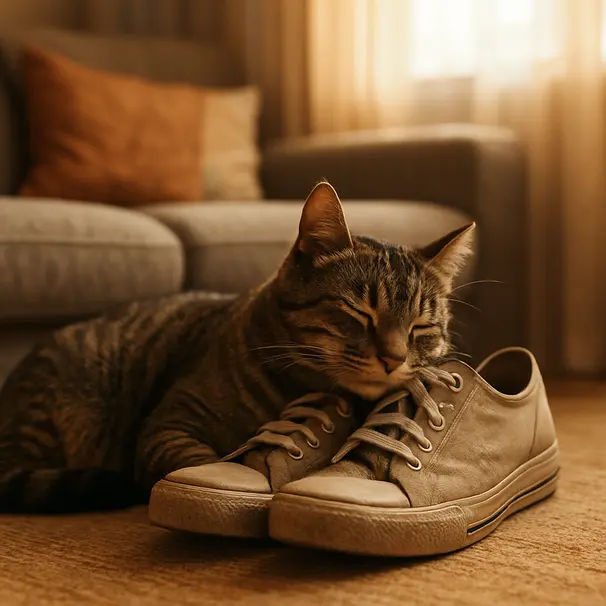
You walk in, drop your bag, kick off your shoes and five minutes later there’s a cat curled up on them. It’s a tiny ritual many of us know and secretly enjoy. But why do cats seem obsessed with our footwear? It’s not just mischief. Shoes are a surprising combination of scent, comfort, and curiosity that many felines find irresistible.
In this article we’ll explore the scent science behind the shoe love, the comfort and safety factors, and practical ways to protect your shoes while keeping your cat happy. These tips are useful for pet owners and carers who want to understand and respect cat behaviour, while keeping the home tidy and safe.
The scent story: why your smell matters to cats
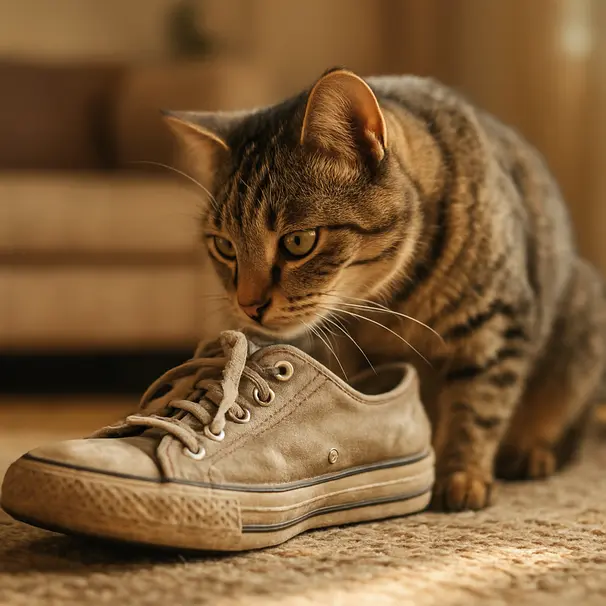
Cats experience the world mostly with their noses and their noses are amazing. Human scent is full of information for them: you, your routines, where you’ve been, and whether you’re nearby. Shoes carry a concentrated version of that information. They take in smells from the places you walked and hold the scent of your feet and the inside of your home.
- Scent as comfort: Your scent is reassuring. To a cat, being near objects that smell like you can feel safe, sort of like how they might press their face into a blanket.
- Territorial marking: Cats have scent glands around their face and paws. When they rub against your shoes, they’re leaving a bit of themselves too. This is cooperative scent-marking. The shoes become a shared object that smells like the household.
- Novelty and richness: A shoe exposes your cat to layered, interesting scents—outside smells, laundry detergent, sweat, and the micro-odour of your skin. That complexity can be more interesting than a plain pillow.
All this makes shoes a social, comforting, and intriguing object in a cat’s world.
A quick note on safety and scent
If your cat is suddenly obsessed with smelling unusual items or showing changes in behaviour around scents, consider checking with a veterinarian. Changes in smell-seeking or in appetite can sometimes signal health or sensory changes. A vet can help rule out underlying issues and give specific advice.
Texture, warmth and tight spaces: beyond scent
Scent is key, but shoes offer more than smell. Think about what a shoe feels like to a cat:
- Cozy curl factor: A sneaker or boot can be the perfect size for a curled-up cat. Cats love spots that conform to their body and feel enclosed.
- Warmth: Shoes retain body heat. A recently-worn pair stays a bit warmer than the floor and that subtle warmth is appealing.
- Texture and firmness: Soft linings and pliant edges make shoes comfortable headrests. The inner curve supports their chin in a way a flat cushion might not.
The combination of scent plus a snug, warm spot makes shoes a naturally perfect nap location.
Why some cats prefer certain shoes
Not all shoes are equal. Cats often show preferences:
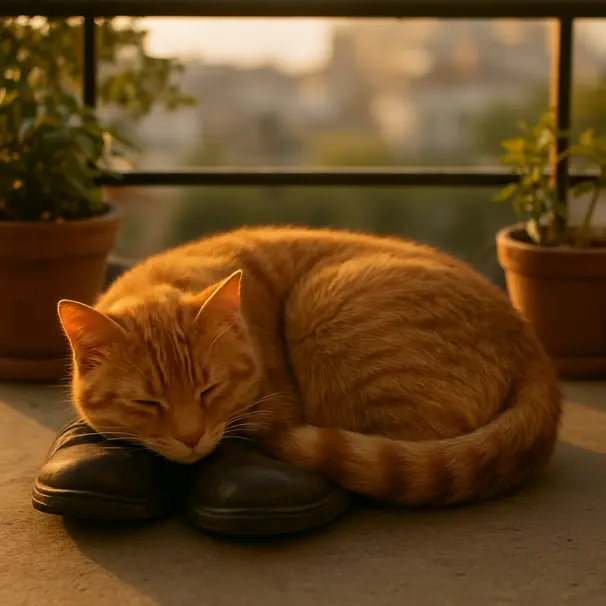
- Fabric over leather: Fabric shoes often trap and release scent more easily than smoother materials.
- Old and well-worn: Worn shoes carry richer scent histories and are usually softer and better shaped for curling up.
- Closed shoes: A shoe with a sheltered opening gives a sense of enclosure.
If you see your cat preferring one shoe over another, it’s likely a mix of smell, comfort and history.
Are there any risks? What to watch for
For most cats, shoes are harmless. Still, there are a few things to watch out for:
- Chemicals: New shoes may have adhesives, dyes, or coatings that can irritate paws or be harmful if chewed. Consider keeping brand-new pairs out of reach until aired out.
- Small parts: Laces, aglets, or decorative studs can be chewed and swallowed. Keep an eye on shoes with loose bits.
- Mould and dirt: Shoes that are wet or mouldy can be unhealthy. Wipe and air shoes that get damp.
- Heat and hazards: Never leave shoes in places where a cat could knock them into dangerous spots, such as near a stove or heater.
If you see excessive licking, vomiting, a cough, or other concerning symptoms after interaction with a shoe, consult your vet for advice.
Gentle ways to manage shoe obsession
You don’t have to ban shoes to keep your home orderly. Try these practical, cat-friendly strategies:
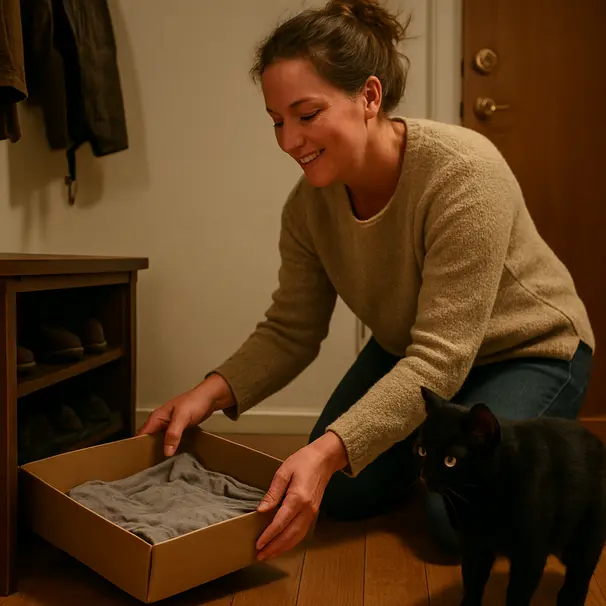
- Offer an attractive alternative. A small box, a soft bed, or a folded sweater that smells like you can be just as appealing. Place it where they like the shoes to be.
- Make shoes less available. Keep shoes in a closed storage bench, cabinet, or a lidded bin when you’re not wearing them. That removes the temptation without upsetting your cat.
- Rotate footwear. If your cat loves a particular pair, give them access to an older, un-needed shoe while you keep your favorites stored away.
- Use texture swaps. Place a soft blanket or a pillow inside your shoe so the cat gets the cosy shape but not the shoe itself.
- Redirect play. If your cat chews laces or paws at shoes, offer interactive toys or long ribbon toys that mimic the motion without the danger of swallowing aglets.
Be patient. Cats can be stubborn about favourite spots. Gentle redirection works better than scolding.
DIY ideas that can help (and that carers can use)
If you’re a pet carer or owner who likes hands-on solutions, here are a few simple projects:
- The scent swap bundle: Put a worn T-shirt or sock you’ve slept in into a small basket or open shoebox. The scent transfer often satisfies the cat without sacrificing your sneakers.
- The cosy shoe pillow: Sew or fold a small pillow to fit inside a shoe. Use soft, washable fabric and a little stuffing. It gives shape and comfort while keeping actual shoes intact.
- Shoe-station placement: If your cat naps near the entryway, create an intentional landing pad nearby. A low shelf with a cushion keeps shoes off the floor and gives the cat a better, purpose-made perch.
These solutions are inexpensive and show respect for a cat’s natural preferences.
Tips for pet carers and sitters
If you’re caring for someone else’s cat, understanding shoe-love helps you provide calm, trustworthy care:
- Keep your own scent neutral. If you’re staying for a few hours, avoid wearing strongly perfumed lotions. Let the cat approach you.
- Ask the owner about shoe rules. Some owners prefer shoes left in the entry; others want them hidden. Follow their routine.
- Offer a friendly swap. If the cat seems lonely for the owner’s scent, place a recently-worn garment (with permission) where the cat naps.
- Respect boundaries. If a cat prefers the owner’s repeated scent, avoid moving beloved items unnecessarily. Small changes can stress some cats.
These small gestures build trust and keep the cat relaxed while you’re caring for them.
When scent behaviour might need attention
Most shoe-related behaviours are harmless, but watch for signs that something else could be going on:
- Compulsive chewing or over-grooming around shoes could mean anxiety or dental discomfort.
- Sudden changes in scent interest, appetite changes, or lethargy might suggest a health issue.
If you’re unsure, consider a vet check-in. A professional can offer peace of mind and rule out medical causes. Use wording like “consider” and “may” when discussing potential concerns, and consult a vet for diagnosis.
Little experiments you can try at home
Curious about what your cat prefers? Try these low-effort tests:
- Swap and observe: Replace a favourite shoe with a worn T-shirt and see how long it takes for the cat to notice.
- Texture test: Offer two small beds, one plush and one firmer, and note which your cat chooses.
- Time-of-day test: Leave shoes out at different times to see whether your cat’s interest changes with routine.
Keep notes if you’re a carer; owners often appreciate a short report on a pet’s preferences and behaviours.
Final thoughts: keep the shoes, keep the cat happy
Shoes are more than clutter for cats. They’re comfort, information, and a little portable piece of their person. Understanding the reasons behind the behaviour makes it easier to live with and manage. With a few simple swaps, safe storage, and thoughtful alternatives, you can protect your footwear and give your cat the sensory comforts they crave.
If you’re ever unsure about a new behaviour or worried about health, consider talking to a vet. Otherwise, enjoy the small, silly moments—the way your cat curls on your sneaker might be one of those tiny bonds that makes living together feel like family.
Quick checklist
- Offer an alternative bed or box near the entry.
- Store new or risky shoes out of reach.
- Swap scents with a worn cloth for comfort.
- Watch for chewing, mould, or chemical smells.
- Ask a vet if behaviour changes rapidly.
A little understanding goes a long way. Your cat’s fascination with shoes is a compliment of sorts. They’re choosing something that smells like you. That’s pretty sweet.